Quick Answer: People type are VA loans hard to get after hearing two stories that cannot both be the whole truth: that a VA mortgage is a rubber stamp, and that VA appraisals kill every deal in a hot zip code. Neither story is a rule. A VA loan is a government-backed benefit with a short list of hard gates — eligibility, occupancy, residual income, and a house that can pass Minimum Property Requirements — plus a longer list of lender overlays that feel like “the VA” when they are really the bank. This article is about those gates, not about repeating our VA loan eligibility checklist word for word. If you do not yet know whether you can get a Certificate of Eligibility, start there. If you already have a COE and want to know why a file stalls, stay here.
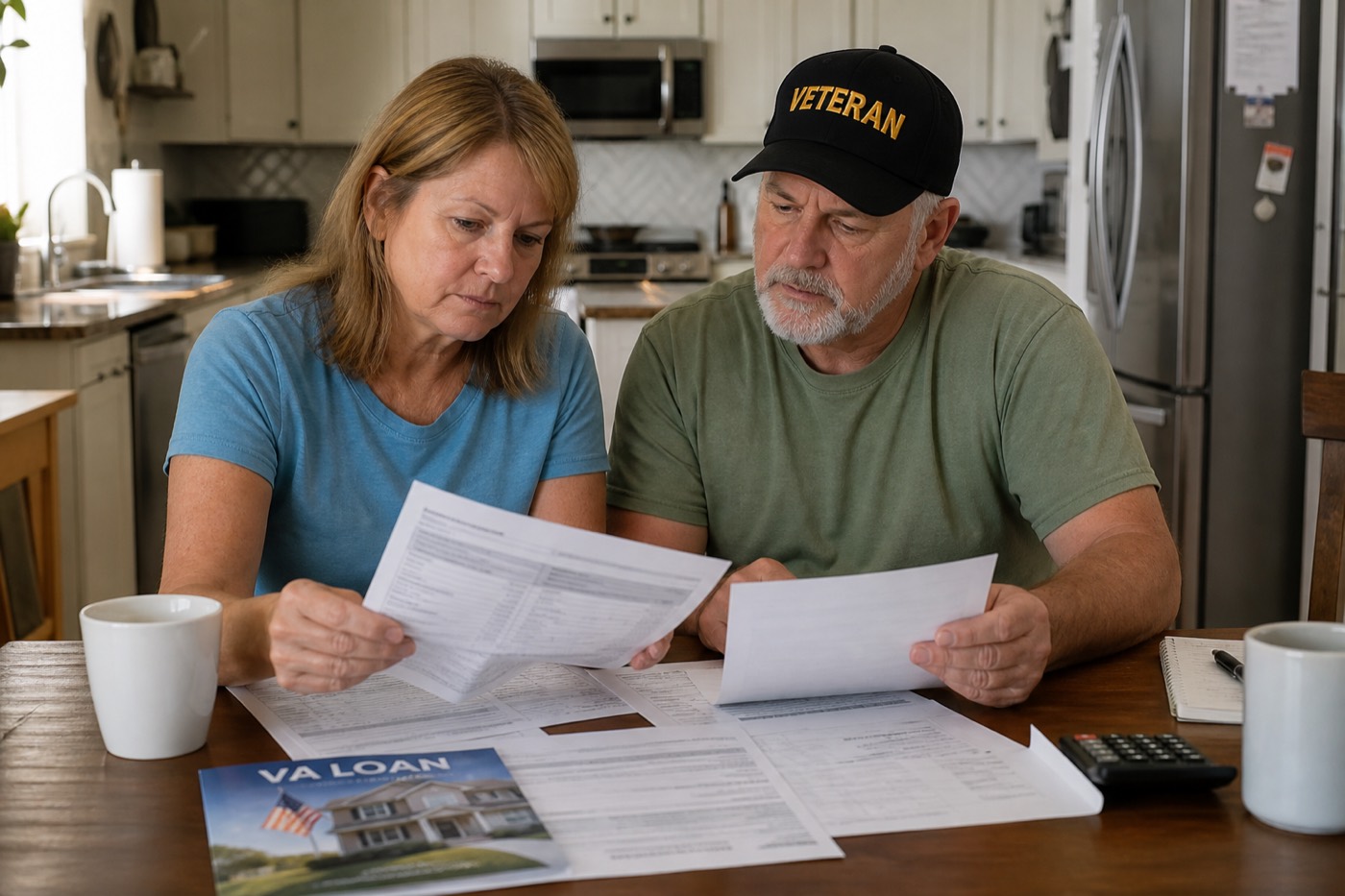
People type are VA loans hard to get after hearing two stories that cannot both be the whole truth: that a VA mortgage is a rubber stamp, and that VA appraisals kill every deal in a hot zip code. Neither story is a rule. A VA loan is a government-backed benefit with a short list of hard gates — eligibility, occupancy, residual income, and a house that can pass Minimum Property Requirements — plus a longer list of lender overlays that feel like “the VA” when they are really the bank. This article is about those gates, not about repeating our VA loan eligibility checklist word for word. If you do not yet know whether you can get a Certificate of Eligibility, start there. If you already have a COE and want to know why a file stalls, stay here.
MorgageCalculator is not a lender. We do not underwrite, lock rates, or issue Certificates of Eligibility. What follows is educational. Confirm residual-income tables, overlays, and property rules with a VA-approved lender and with VA.gov housing assistance.
The honest answer: hard compared with what?
Are VA loans hard to get compared with a conventional loan at 5% down and PMI? For an eligible borrower who will live in the home, often no. Zero down is allowed with full entitlement. There is no monthly private mortgage insurance. The VA does not publish a universal minimum credit score. Residual income can approve a family that looks tight on a conventional 36% debt-to-income test. Waiting periods after bankruptcy or foreclosure are often shorter in VA shops than in conventional ones. Those are the reasons veterans hear “easy.”
Are VA loans hard to get compared with a cash offer on a flawless suburban house? Sometimes yes — not because the veteran is a bad borrower, but because the property has to be safe and sanitary under VA Minimum Property Requirements, the seller has to accept a VA contract, and the timeline includes an appraisal that is allowed to call out repairs. In a multiple-offer weekend, some listing agents still treat VA as slower or fussier than conventional. That reputation is partly outdated and partly earned on houses that should not have been listed as “move-in ready.”
So the useful question is not a yes/no. It is which part of the file is hard for you: credit overlay, residual income, occupancy, COE paperwork, or MPRs. Bundling those into “VA is hard” is how people talk themselves into PMI they did not need.
VA loan credit score: the VA’s silence vs the lender’s overlay
The Department of Veterans Affairs does not set a national minimum FICO for a purchase loan the way a consumer blog wants a single number. VA loan credit score rules in the wild are lender overlays. Many VA-approved lenders treat something in the low-600s as a practical floor. Some will look lower with compensating factors. Some will not. A 740 file and a 600 file can both be “VA” and still get different rates, different documentation, and different suspense conditions.
What actually sits under a credit conversation: score versus thin-file history; recent lates, collections, and a brand-new auto loan; bankruptcy and foreclosure seasoning (VA is often more flexible than conventional, still not “yesterday”); and rate, not just a yes. Clearing an overlay is not the banner-ad note rate. If a lender says “the VA requires 620,” ask for the overlay sheet and shop VA-experienced lenders. Chaotic unexplained lates are still a real loan wrapped in a guarantee, not a magic eraser.
Do not confuse credit with the funding fee. The fee is a separate VA program cost for most borrowers; it is not PMI. Percentages change. Check VA.gov housing assistance and your Loan Estimate rather than a frozen blog chart.
Certificate of Eligibility (COE): the gate that is usually easy until it is not
Hard cases: Guard/Reserve points, medical separations, older paper records; entitlement still tied to another VA loan or an unrestored loss; surviving-spouse extras; name or SSN mismatches. If the lender cannot pull a COE, apply through VA.gov housing-assistance tools and current forms with discharge papers. Do not wait until a 10-day option period to learn entitlement is partial. Partial is math (remaining entitlement, county limits), not an automatic denial.
A COE is necessary, not sufficient. Veterans bounce on residual income, occupancy, or MPRs with a certificate in hand. Treat it as a ticket into the line, not an approval letter.
Occupancy requirement: VA is a home-to-live-in product
The occupancy requirement is one of the brightest lines on a VA purchase. The loan is for a primary residence (with limited, documented exceptions the lender will recite if they apply to you). It is not a product for a pure investment duplex you will never enter, a vacation house you visit twice a year, or a house-hack story that is actually “I will Airbnb every bedroom.” If that is the goal, you are not looking at a hard VA loan. You are looking at the wrong program.
What occupancy looks like in underwriting, practically:
- You intend to move in within the timeframe your lender discloses (often discussed as a reasonable period after closing — confirm the current rule on your disclosures, not on a blog).
- The property type fits how people actually live: a house, a VA-approved condo, a manufactured home that meets VA rules, sometimes a small multi-unit if you occupy one unit and the lender knows how to do it.
- A second simultaneous VA loan is a specialty fact pattern, not a default. Entitlement and occupancy both get harder when you already have a VA-financed house.
Sellers and agents who say “VA buyers never occupy” are recycling a rumor. Occupancy fraud is a crime. Occupancy as designed is why the guarantee exists. If duty station and family house split your life, say so early. Military transfers have playbooks. Silence plus a weird commute is how occupancy questions turn into denials.
Residual income: the cash-flow test conventional shoppers forget
Residual income is the VA-flavored answer to “can this household still eat after the mortgage.” Conventional files lean on debt-to-income ratios. VA files still look at ratios, but they also subtract debts and housing from income and ask whether enough money is left for the region and the family size. A borrower with a moderate ratio and a large household in a high residual region can fail. A borrower with a slightly high ratio, few dependents, and leftover cash can pass. That is why one veteran hears “VA is easy” and a cousin hears “VA declined me for residual.”
What you can do without a table: count household the way the lender counts; do not open car loans mid-stream; keep bank statements boring; do not treat overtime-heavy pay as eternal base. Residual is trying to approximate groceries after the mortgage.
If residual is tight, the levers are the payment, other debts, and household size. Arguing with the concept is not a lever. It exists because zero-down loans can otherwise approve a payment that looks fine on DTI and fails on groceries. Price housing on our VA loan calculator, then let a human apply the regional table.
VA MPRs: when the house is the problem, not the veteran
VA MPRs (Minimum Property Requirements) are the safety-and-sanitary floor: working utilities, sound roof, no peeling lead-paint hazards in the way the VA currently treats them, heat, access, obvious structural failure, and similar livability items. They are not a renovation wish list, and they are not a conventional “value-only” glance in every case. A VA appraisal can require repairs before the guarantee attaches. That is the grain of truth in “VA deals die.”
What makes MPRs feel hard in 2026:
- Investor-owned flips that still have missing railings, nonfunctional HVAC, or unfinished baths.
- Rural wells, septic, and access issues that a city conventional appraisal never poked.
- Condos that are not on the VA-approved list, or projects with litigation and deferred maintenance.
- Sellers who refuse any repair and listing agents who will not take a VA offer because the last VA deal needed a broken-window condition.
Walk the house like an inspector before you fall in love. Use a VA-experienced agent with specific repair language. Budget calendar slack — an MPR repair is often a contractor visit, not a doomed loan. If the property cannot reasonably meet MPRs, walk. That is the guarantee doing its job so you do not buy an unsafe house at 100% financing.
New construction and kept-up suburban stock often sail through. Internet MPR horror stories cluster on cheap listings that were never VA-shaped. Are VA loans hard to get on those listings? Yes — and they should be. Hardness also hides in ordinary work: self-employment returns, condo project approval, manufactured-home foundations, remaining entitlement on a prior VA loan. “VA has no loan limit” headlines describe full entitlement, not a borrower who still owns a VA-financed house. A clean letter from a lender who closes VA every week looks like a conventional file with a better down-payment story. A dabbler plus a house that needs a roof looks “hard.”
A practical sequence if you are asking this question in 2026
- Confirm eligibility and pull a COE with a VA-savvy lender. Use our eligibility guide as a briefing, not as a substitute for the certificate.
- Price a realistic house on the VA loan calculator with taxes and insurance. Do not add PMI. VA loans do not have monthly PMI; see do VA loans have PMI and VA funding fee vs PMI.
- Ask the lender to run residual income on your household size and region before you bid at the ceiling.
- Shop houses that would pass a careful inspection. Treat MPRs as a filter, not a surprise.
- If a seller is VA-allergic, decide whether that listing is worth a fight. Many are not.
So, are VA loans hard to get? For an eligible occupant with a COE, boring income docs, residual income that clears, and a house that is actually livable, they are often easier than the conventional path at the same credit score because cash-to-close and PMI are not working against you. For a borrower with no occupancy story, a collapsing bungalow, or no eligibility, they are not hard. They are unavailable. Those are different sentences. Use the one that matches your file, then confirm it with a licensed VA-approved lender and with VA.gov.
Mortgage Calculator editorial team
Organization byline. Pages are editorially reviewed; we do not invent CFA/CFP credentials or user-count testimonials. Formulas are documented on the methodology page.
Related Articles
Do VA Loans Have PMI? Funding Fee vs PMI
VA loans have no monthly PMI. Compare the one-time funding fee with conventional PMI and FHA MIP.
2026-08-25The 28/36 Rule Explained
Learn how the 28/36 debt-to-income rule determines how much house you can afford.
2026-01-15What is PMI and How to Avoid It
Private mortgage insurance explained — what it costs and how to remove it.
2026-01-22